COMPLIMENTARY U.S. SHIPPING ON ORDERS $149+
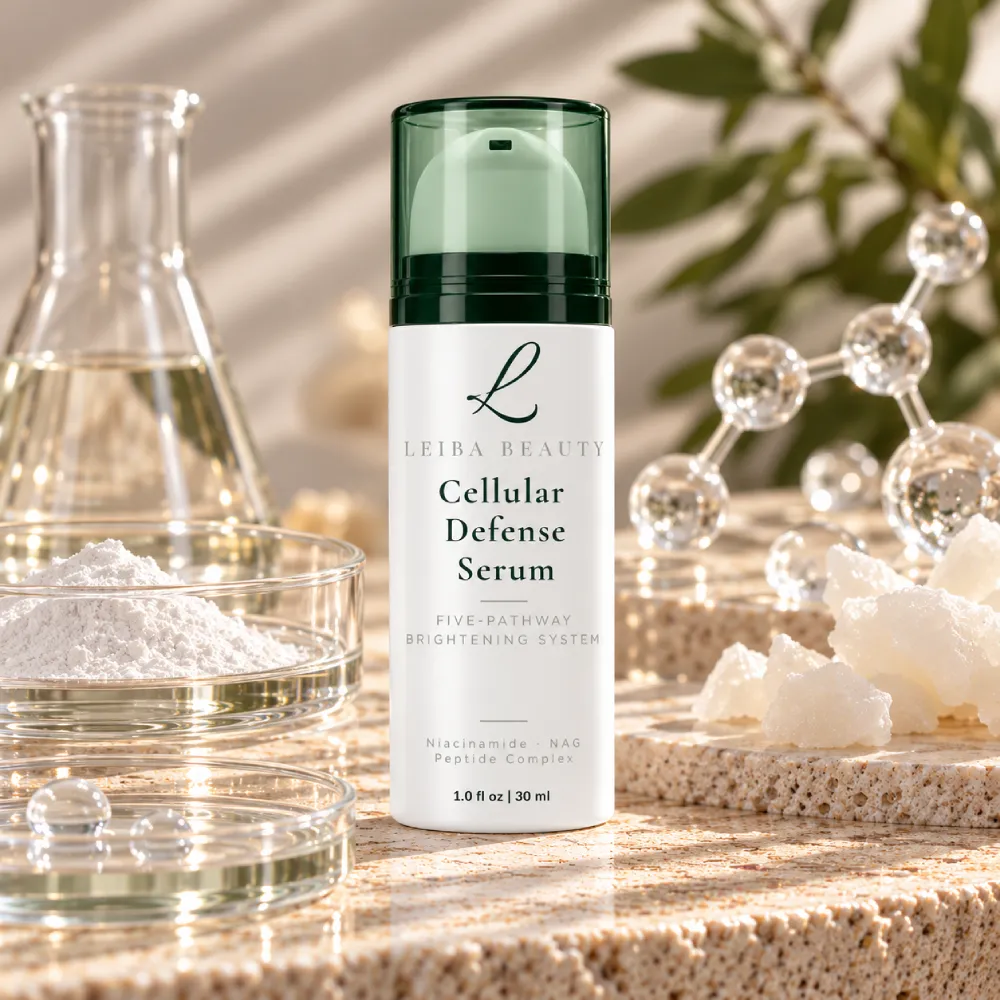
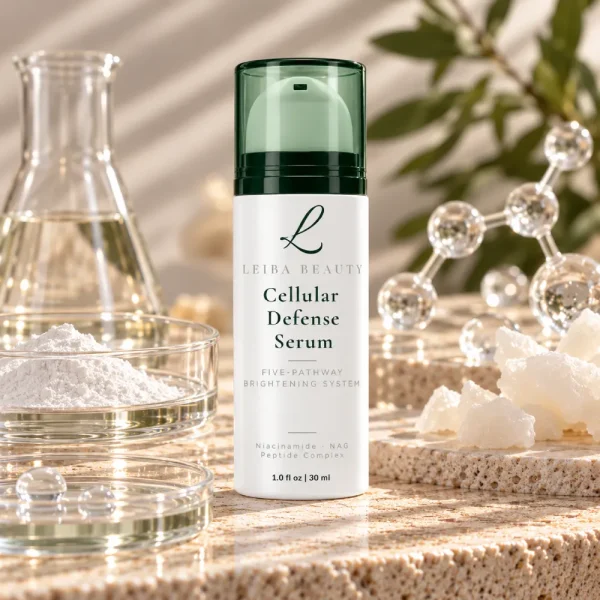
Niacinamide, NAG, Gluconolactone, Laminaria Saccharina, and Peptide Complex. Each targets a different mechanism of brightening and aging. Not one active carrying five jobs.
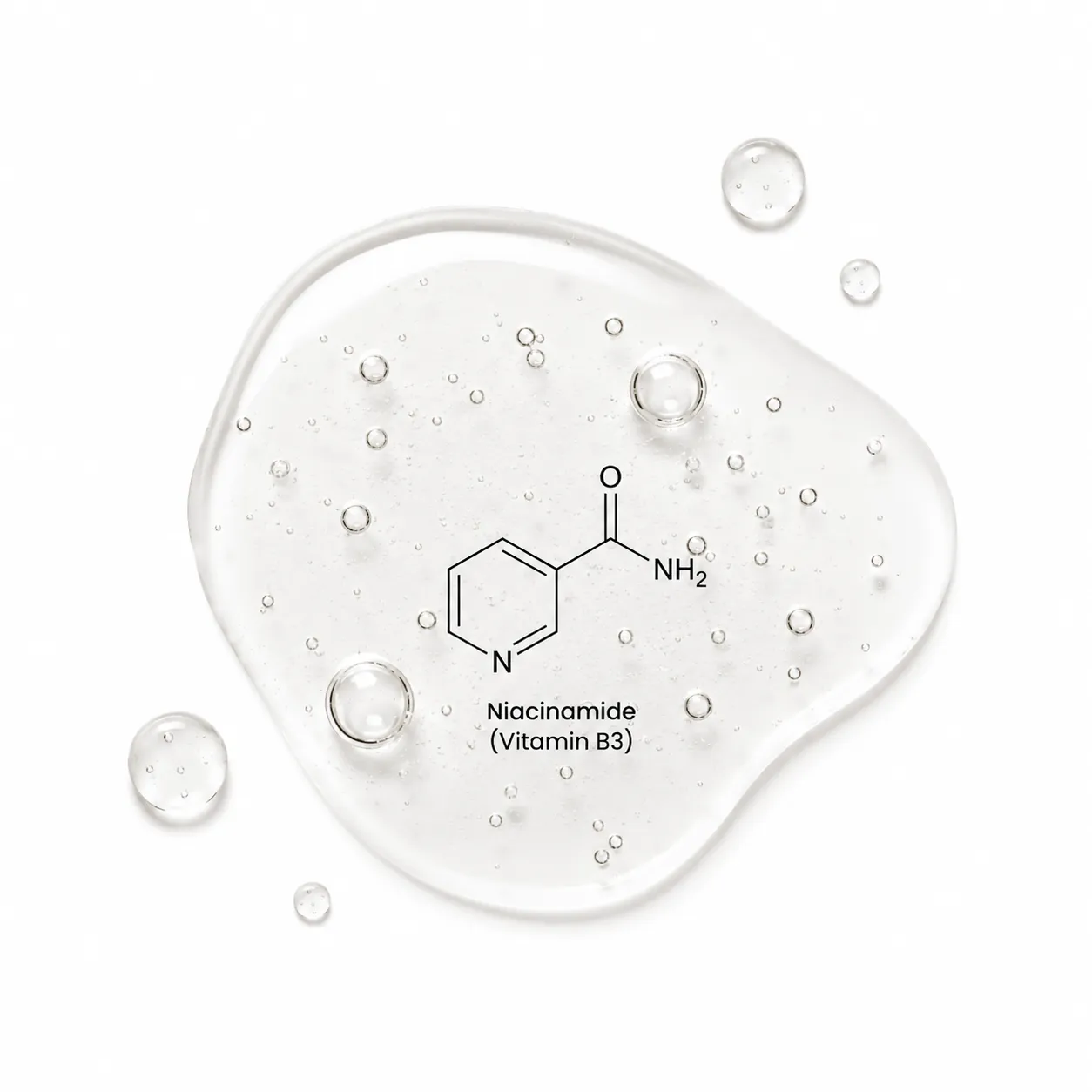
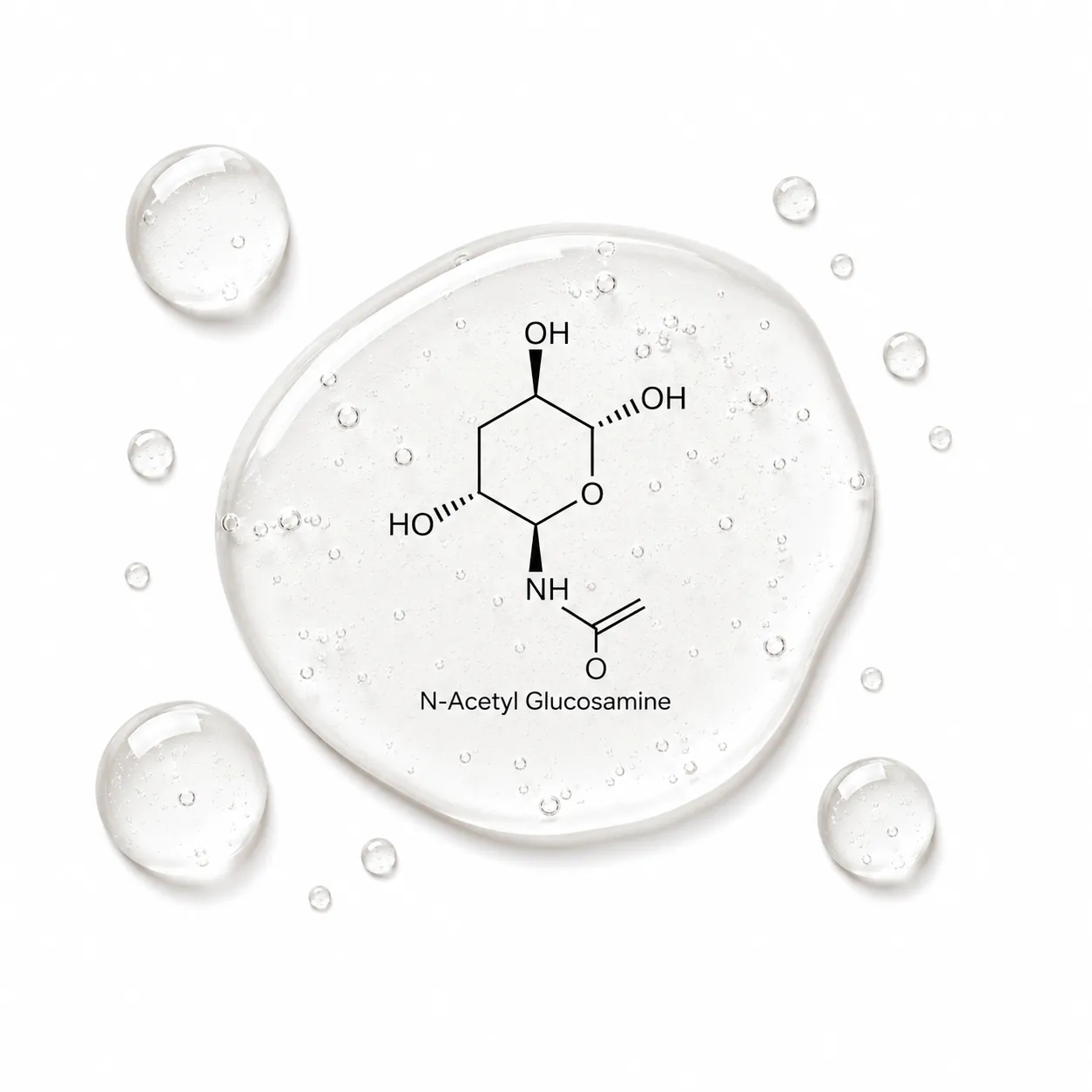
Niacinamide blocks melanosome transfer. NAG interrupts melanin production upstream. Two mechanisms, studied together in a randomized controlled trial of 202 participants.
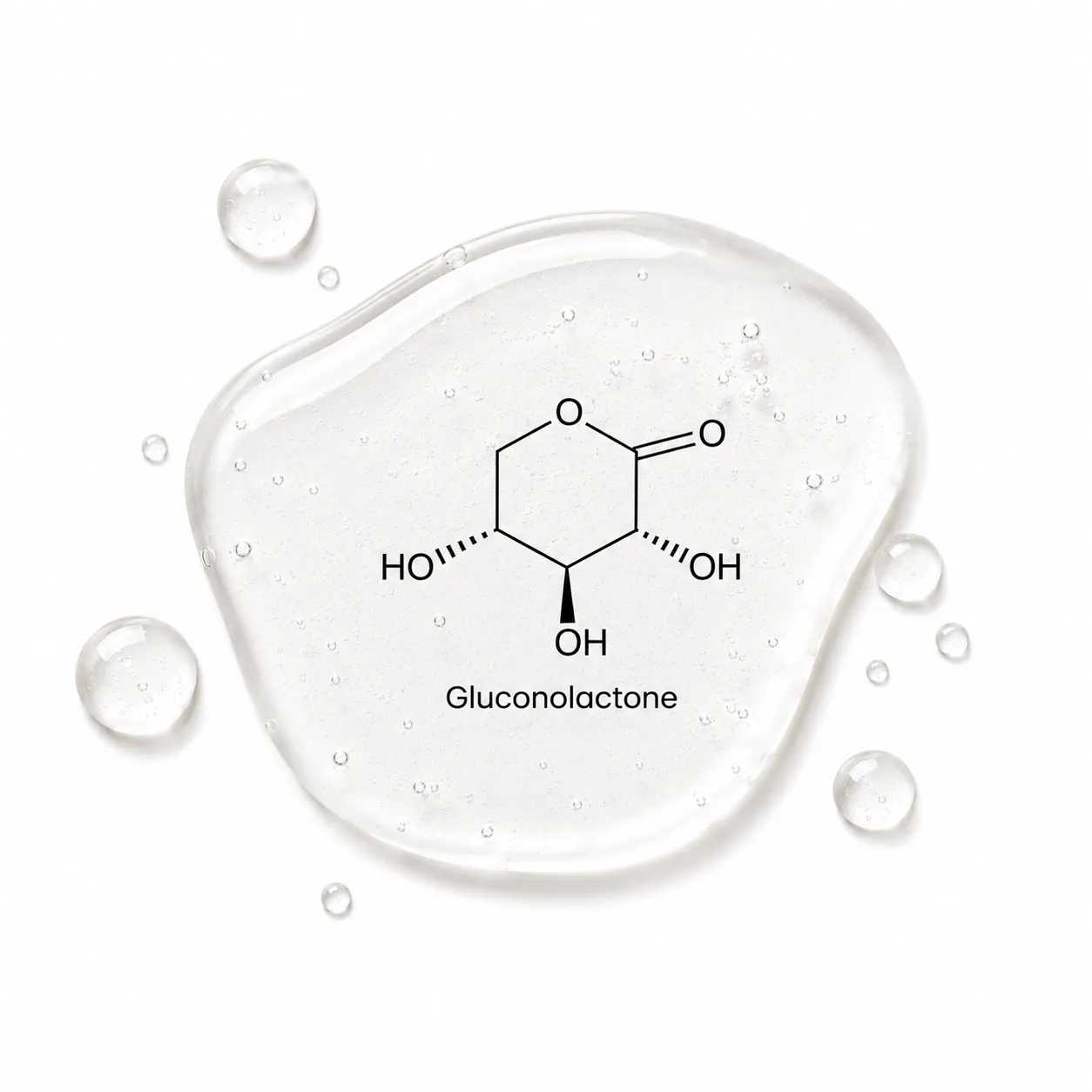
Gluconolactone (PHA) resurfaces and delivers anti-glycation benefits without the sensitivity risk of AHAs. Better tolerated by reactive and compromised skin.
Peptide Complex (Palmitoyl Tripeptide-1 + Palmitoyl Tetrapeptide-7) supports collagen synthesis signaling. Supplier in vivo data reports an age-reversal equivalent of 2–5.5 years.
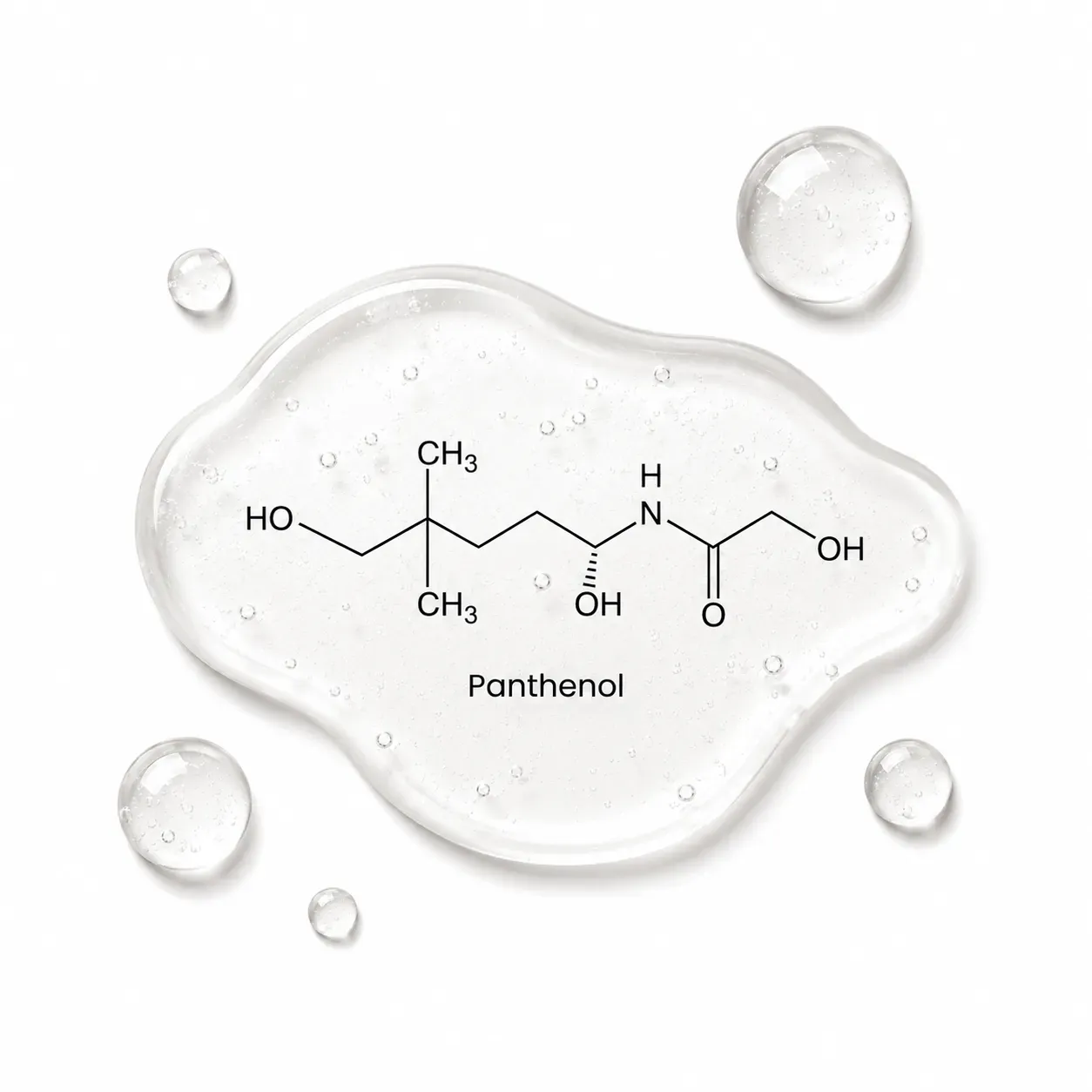
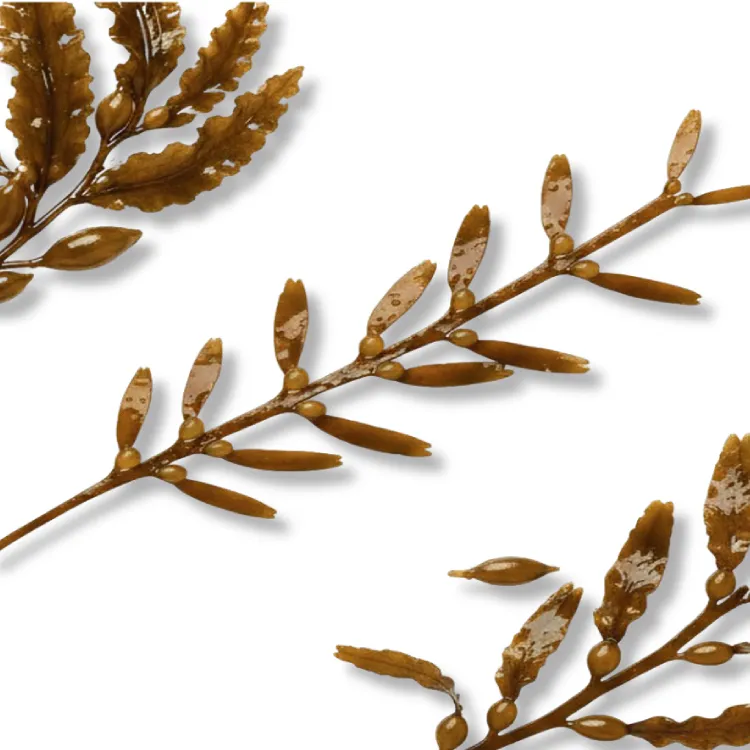
Panthenol supports fibroblast proliferation and replenish the barrier. Laminaria Saccharina provides brown-seaweed polysaccharide humectancy at the skin’s surface.
Every hero ingredient is backed by published, peer-reviewed research. Citations listed on this page; not marketing claims.
Most serums pick one thing. Brighten. Or hydrate. Or fight fine lines. This one does five, and not by throwing every trending ingredient into a bottle.
Five mechanisms. No filler.
| Focus | Brightening · Anti-aging · Barrier repair |
| Skin Type | All skin types; ideal for normal, combination, or uneven tone |
| Key Concerns | Dark spots, dullness, fine lines, dehydration, uneven texture |
| Texture | Lightweight water-gel; absorbs without residue |
| Key Actives | Niacinamide · NAG · Gluconolactone (PHA) · Panthenol · Laminaria Saccharina · Peptide Complex |
| Use | AM + PM, after toner, before moisturizer |
| Size | 1 fl oz / 30 mL |
| pH | 5.0–5.5 (balanced for skin) |
Cellular Defense Serum is the third step in the Leiba routine. The treatment step between toner and moisturizer, where the actual brightening and improvement happen.
The five-pathway architecture:
Sixteen ingredients, all active at pH 5.0–5.5. No filler botanicals, no fragrance, no dye.
Texture: Absorbs in under a minute, no residue, no pilling. Layers clean under moisturizer and SPF.
Pro tip: Apply to slightly damp skin immediately after your toner. The pH-primed surface lets the niacinamide and PHA actives work from the first application. No adjustment period.


Step 1
Step 2
Step 3 · You are here
“My skin changed gradually. The glow I had at 22 wasn’t there at 32. Marks from years of inconsistent SPF weren’t budging. I was cycling through vitamin C (always irritated me) and retinol (great for three nights, then two weeks of recovery). The niacinamide product was the one that actually did something.
That’s when I found the study — a double-blind RCT in the British Journal of Dermatology where 202 people used niacinamide and NAG together and got statistically significant brightening. I thought: why is the ingredient with real proof sitting in $12 drugstore products while the $80 serums lead with vitamin C?
I worked with our formulator to build a serum anchored to that clinical foundation. PHA exfoliation, Laminaria Saccharina Extract for marine-origin hydration that complements panthenol instead of duplicating it. Peptide Complex over Argireline because the data actually supports it. We created a twelve-ingredient product, five mechanisms, and a serum I actually want to use every day.”
Most serums deliver one or two active ingredients targeting one mechanism. This serum targets five simultaneously: niacinamide + NAG interrupt melanin production from two different angles; gluconolactone PHA clears dead surface cells without irritation; panthenol and Laminaria Saccharina marine polysaccharides hydrate from two different directions; and Matrixyl 3000 signals fibroblasts to produce collagen. Each pathway is independent — they don’t compete, they stack.
Yes. The PHA (gluconolactone) was specifically chosen over AHAs because its larger molecular structure means it stays in the outer skin layer — it doesn’t penetrate deeply enough to cause stinging or irritation. The formula is fragrance-free, dye-free, and formulated at pH 5.0–5.5, which matches your skin’s natural range. If you’re new to actives, start with PM use only for the first two weeks.
Yes — it’s designed to layer. Apply after toner, before moisturizer. If you’re using retinol, apply this first and retinol on top (or alternate nights). If you’re using a vitamin C serum, use vitamin C in the morning and this serum at night. The PHA in this formula actually enhances the absorption of products applied on top by clearing the surface layer.
The Ordinary uses niacinamide alone with zinc. This formula adds four additional mechanisms: N-Acetyl Glucosamine (a clinically validated pairing with niacinamide, published in the British Journal of Dermatology), Gluconolactone PHA for surface exfoliation, Laminaria Saccharina marine polysaccharides for deep hydration, and Matrixyl 3000 peptide complex for collagen signaling. It also doesn’t contain zinc, which can cause temporary flushing when combined with niacinamide in some formulations.
Matrixyl 3000 — a combination of Palmitoyl Tripeptide-1 and Palmitoyl Tetrapeptide-7. Palmitoyl Tripeptide-1 mimics the GHK tissue repair signal, stimulating fibroblasts to produce Type I and III collagen. Palmitoyl Tetrapeptide-7 has anti-inflammatory activity that slows collagen degradation. Croda’s in vivo clinical data showed anti-wrinkle efficacy equivalent to a 2-year age reversal within one month of use.
Both. In the morning, it layers cleanly under SPF and doesn’t pill. At night, it works alongside your other actives. If your routine includes retinol or a strong exfoliant, use this serum first — the PHA preps the surface, and the barrier-supporting ingredients help offset any irritation from the actives that follow.
1Kimball AB, Kaczvinsky JR, Li J, et al. Reduction in the appearance of facial hyperpigmentation after use of moisturizers with a combination of topical niacinamide and N-acetyl glucosamine: a randomized, double-blind, vehicle-controlled trial. Br J Dermatol. 2010;162(2):435–441. PubMed ID: 19845667.
2Hakozaki T, Minwalla L, Zhuang J, et al. The effect of niacinamide on reducing cutaneous pigmentation and suppression of melanosome transfer. Br J Dermatol. 2002;147(1):20–31. PubMed ID: 12100180. · Bissett DL, Robinson LR, Raleigh PS, et al. Reduction in the appearance of facial hyperpigmentation by topical N-acetyl glucosamine. J Cosmet Dermatol. 2007;6(1):20–26. PubMed ID: 17348991.
3Croda Beauty. [Peptide Complex] — clinical and technical data. In vivo anti-wrinkle study; supplier data reports age-reversal equivalent of 2–5.5 years; 78.49% natural origin per ISO 16128.
4Murphy MJ, Dow AA. Clinical studies of the safety and efficacy of macroalgae extracts in cosmeceuticals. J Clin Aesthet Dermatol. 2021;14(10):37–41. PMC8711622. Brown-seaweed marine polysaccharides support skin hydration through humectant and hydrocolloid mechanisms.
5Evaluation of the effects of 10% and 30% gluconolactone chemical peel on sebum, pH, and TEWL. J Cosmet Dermatol. 2023;22(12):3305–3312. doi:10.1111/jocd.15864. · A polyhydroxy acid skin care regimen provides antiaging effects comparable to an alpha-hydroxyacid regimen. Cutis. 2004;73(2 Suppl):3–13. PubMed ID: 15002657.