Introduction
Your skin does its most significant biological work while you sleep. The nighttime skincare routine isn’t about adding steps. It’s about applying the right ingredients to your skin at the moment your biology is most receptive to them.
The difference between morning and night isn’t just timing. It’s mechanism.
Skin During Sleep
During sleep, transepidermal water loss increases, cellular turnover accelerates, collagen synthesis peaks, and the skin’s permeability rises, so ingredients penetrate more effectively than during the day.
A nighttime routine built around these processes doesn’t fight your skin’s biology. It works with it.
Personal Experience
I built the Leiba routine as a nurse who understood what barrier compromise actually looks like, not as a cosmetic concept, but as a clinical reality.
The same principles that govern wound healing govern nighttime skin recovery: the barrier needs to be intact, hydration needs to be retained, and the ingredients doing the repair work need to get through.
That’s the design logic behind the four steps below.
Why a Nighttime Skincare Routine Works Differently Than Morning
Morning skincare is defense. Nighttime skincare is recovery.
Three measurable physiological changes happen while you sleep that make the PM routine distinct:
Transepidermal water loss increases. Skin permeability rises overnight, which means moisture escapes more readily. The final step in the routine, the barrier cream, directly addresses this by sealing moisture in and reducing the rate of overnight water loss.
Cellular turnover peaks. Skin cell renewal accelerates during sleep, making this the optimal window to support the renewal process with actives that work at the barrier and cellular level.
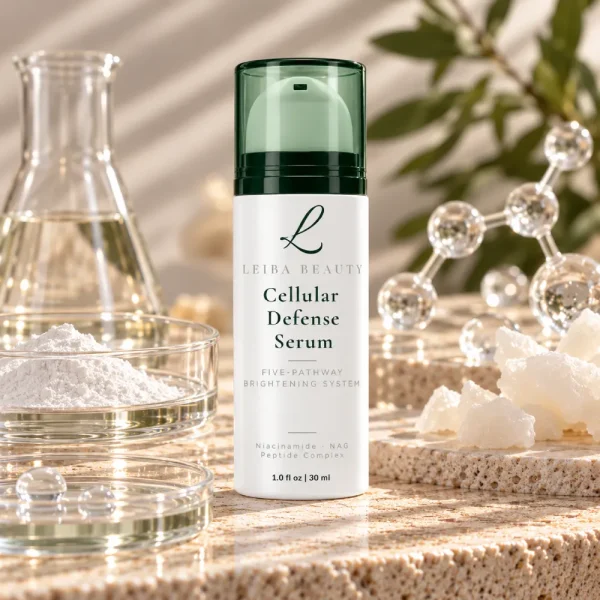
Collagen synthesis is most active. Fibroblast activity, the cellular process behind collagen production, is elevated overnight. Ingredients that support collagen signaling, like the peptide complex in the Cellular Defense Serum, have more biological context to work with at night than during the day.
The routine doesn’t change between AM and PM. The same four products, the same sequence. What changes is how your skin uses them overnight.
Step-by-Step Nighttime Skincare Ritual
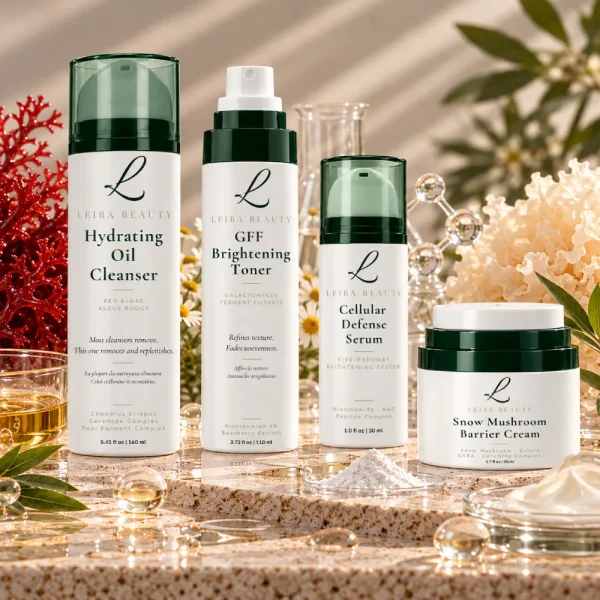
Four steps. Each timed to your skin’s overnight biology. Tap any step to see the science.
What Undermines a Nighttime Routine
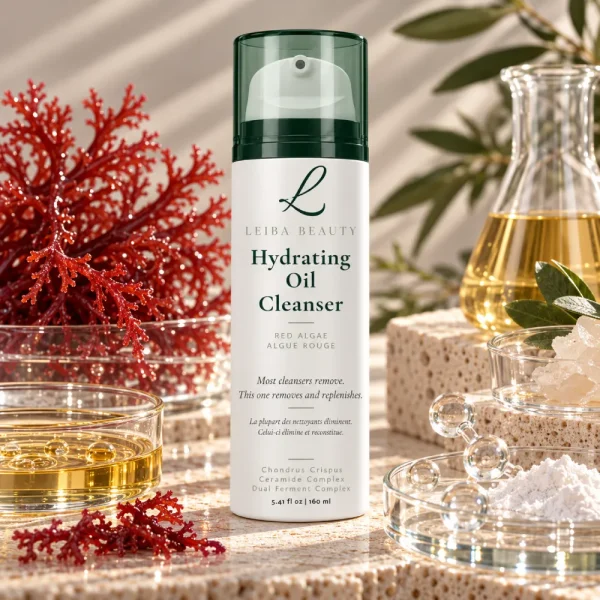
- Sleeping in SPF residue: SPF needs to be fully removed at PM. The oil cleanser is formulated specifically to dissolve SPF without stripping.
- Skipping the barrier cream: overnight TEWL is highest during sleep. Without a barrier cream as the final step, everything the serum delivered has no seal. This is the most common reason people wake up with tight, dehydrated skin.
- Not waiting between steps: allow 30–60 seconds after the toner, 60 seconds after the serum. Layering too quickly reduces absorption and causes pilling.
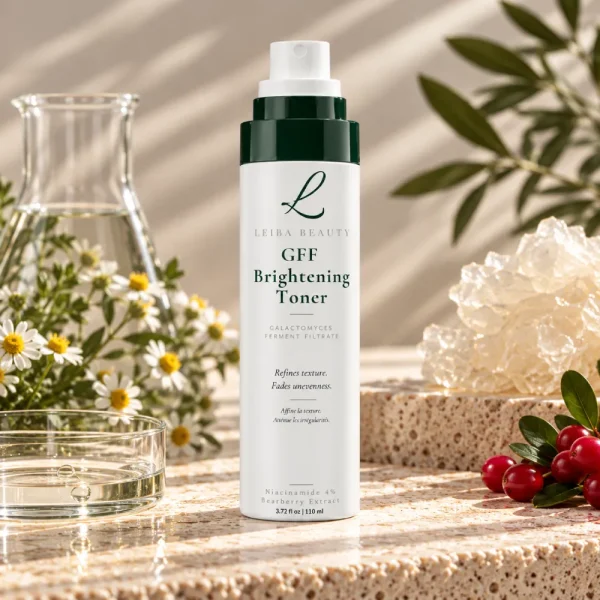
- Over-exfoliating at night: The toner refines and brightens (it contains no acids), and the serum's gluconolactone (PHA) handles gentle surface exfoliation daily without irritation. If you add stronger exfoliating acids from other products, alternate nights rather than stacking them on the same evening.
- Hot water during PM cleanse: degrades barrier lipids. Lukewarm only, especially at night when the barrier is about to do its most significant overnight repair work.
- Neglecting neck and décolletage: the same TEWL, collagen loss, and pigmentation mechanisms that affect the face apply to the neck. Extend every step downward.
What Supports Your Nighttime Routine Beyond Products
Skincare products work within the limits of your body’s recovery capacity. A few variables outside the routine directly affect how well your skin repairs overnight:
- Sleep duration and quality. Collagen synthesis, cellular turnover, and DNA repair all elevate during deep sleep. Seven to nine hours is the clinical recommendation. Not because it sounds good, but because repair processes are truncated in shorter sleep cycles. A consistent routine applied before poor sleep will outperform an inconsistent one applied before eight hours, but both matter.
- Pillowcase hygiene. Cotton pillowcases absorb product and transfer bacteria. Washing weekly minimum reduces bacterial load against barrier-compromised skin. Silk or satin reduces mechanical friction if you’re managing sensitivity or post-procedure skin.
- Humidity. TEWL increases in low-humidity environments. The barrier cream addresses this directly, but a room humidifier (40–60% relative humidity) reduces the baseline overnight water loss rate the barrier cream is working against.
- Consistency over intensity. The research behind every ingredient in the Leiba routine shows results compounding over weeks, not days. Week eight looks different than week one. The routine works better the longer it’s used consistently than it does applied aggressively but intermittently.
The Logic Behind the Nighttime Sequence
The Leiba nighttime routine uses the same four products in the same order as the morning routine, because the sequence logic doesn’t change between AM and PM. What changes is how your skin responds to them.
The cleanser removes the day’s makeup without compromising the skin barrier. The toner primes and brightens while cellular turnover peaks. The serum delivers a peptide complex during the hours when fibroblast activity is highest. The barrier cream seals overnight water loss and supports recovery through to morning.
No step is filler. No ingredient is there for the label.
With Love,
Sarah Leiba, BSN, RN
Founder, Leiba Beauty
Nighttime Routine Questions Answered
Why is a nighttime skincare routine important?
Because your skin’s repair biology peaks while you sleep. Cellular turnover, collagen synthesis, and DNA repair are all most active during deep sleep — and skin permeability increases overnight, meaning ingredients penetrate more effectively than during the day. A nighttime routine positions the right ingredients to work during your skin’s most productive hours.
Do I need to cleanse if I don't wear makeup?
Yes. Sebum, environmental pollution particulates, and SPF residue accumulate on the skin throughout the day regardless of makeup use. Sleeping with that buildup on your skin means your overnight repair processes are working against a contaminated surface. The oil cleanser removes all of it without disrupting the barrier.
Can I use the same products morning and night?
Yes — the Leiba routine is designed to be used AM and PM without modification. The same four products, the same sequence. The toner and serum are formulated for daily use at both steps. The barrier cream wears under SPF in the morning and functions as your standalone final PM step at night.
How often should I exfoliate at night?
The Cellular Defense Serum contains gluconolactone (PHA) — a gentle exfoliant appropriate for daily use. If you supplement with additional exfoliating acids from other products, limit those to 2–3 nights per week and apply after the toner, before the serum. Do not stack multiple exfoliants on the same night.
Can my pillowcase affect my skin?
Yes. Cotton absorbs skincare product and transfers bacteria and debris to the skin overnight. Washing pillowcases weekly minimum is the baseline recommendation. If you’re managing sensitivity, reactive skin, or post-procedure recovery, silk or satin reduces friction and product absorption.
Should I moisturize differently if I use retinoids from another brand?
Yes. Apply retinoids after the toner step, allow full absorption, then apply the Cellular Defense Serum followed by the Snow Mushroom Barrier Cream. The barrier cream’s ceramide complex and ectoin provide the barrier support needed to reduce retinoid-associated dryness and sensitivity. Do not apply retinoids and the toner’s active ingredients simultaneously without a buffer step between them.
How long before I see results from a consistent nighttime routine?
Texture and hydration improvement: within the first week. Visible brightening from the niacinamide + NAG + bearberry pathway: 2–4 weeks. Barrier-level changes measurable by TEWL reduction: 4+ weeks. Collagen-signaling support from Matrixyl 3000: supplier clinical data reports measurable change within 4 weeks of consistent use. Results compound. The routine performs better at month three than month one.
Scientific References
Chen Y, et al. The optimal cleansing method for the removal of sunscreen: water, cleanser or cleansing oil? J Cosmet Dermatol. 2020;19(3). doi:10.1111/jocd.12995.
Spada F, et al. A daily regimen of a ceramide-dominant moisturizing cream and cleanser restores the skin permeability barrier: a randomized trial. Dermatol Ther. 2021;34(3):e14970. doi:10.1111/dth.14970. PMC8459234. · Kono et al. J Dermatol.
2021. PMID 34596254.Bjørklund G, et al. The role of astaxanthin as a nutraceutical in health and age-related conditions. Molecules. 2022;27(21):7167. PMID 36363994; PMC9655540.
Takei K, et al. Galactomyces ferment filtrate prevents Th2-mediated reduction of filaggrin in an AhR-dependent manner. Clin Exp Dermatol. 2015;40(7):786–793. PMID 25786502. · Transcriptomic analysis of human keratinocytes treated with
Galactomyces ferment filtrate. J Clin Med. 2022;11(16):4645. PMC9409768.Hakozaki T, et al. The effect of niacinamide on reducing cutaneous pigmentation and suppression of melanosome transfer. Br J Dermatol. 2002;147(1):20–31. PMID 12100180. · Boo YC. Arbutin as a skin depigmenting agent. Antioxidants. 2021;10(7):1129. PMID 34356362; PMC8301119.
Kimball AB, Kaczvinsky JR, Li J, et al. Reduction in facial hyperpigmentation after use of moisturizers with topical niacinamide and N-acetyl glucosamine: a randomized, double-blind, vehicle-controlled trial (n=202). Br J Dermatol. 2010;162(2):435–441.
PMID 19845667.Evaluation of 10% and 30% gluconolactone chemical peel on sebum, pH, and TEWL. J Cosmet Dermatol. 2023;22(12):3305–3312. doi:10.1111/jocd.15864. · A polyhydroxy
acid skin-care regimen provides antiaging effects comparable to an alpha-hydroxyacid
regimen. Cutis. 2004;73(2 Suppl):3–13. PMID 15002657.Croda Beauty. [Peptide Complex] — clinical and technical data (supplier study). Supplier data reports an age-reversal equivalent of 2–5.5 years; collagen-signaling mechanism.
Tremella fuciformis polysaccharide — hydration film and UV/oxidative protection: Ma X, et al. Int J Immunopathol Pharmacol. 2021;35. PMC8172338 (review); Fu H, et al.
J Cosmet Dermatol. 2021;20(12):4052–4059. PMID 36757441 (in vitro UVA).Ectoin — TEWL reduction and hydration: Molecules. 2025. PMC12158106; systematic
review, Dermatology and Therapy. 2022. PMC8850511.GABA upregulates filaggrin and aquaporin-3 in keratinocytes (hydration mechanism). Cosmetics. 2024;11(1):19. doi:10.3390/cosmetics11010019.