Introduction
A morning skincare routine isn’t about adding more steps. It’s about getting the right things on your skin, in the right order, before the day’s stressors have a chance to do damage.
Nighttime is for replenishing. Morning is for defense.
Overnight Breakdown
During sleep, your skin focuses on cellular recovery: collagen synthesis, barrier lipid replenishment, tissue regeneration. By the time you wake up, those processes have wound down. UV radiation, environmental pollutants, and transepidermal water loss are waiting. A morning routine built on the right sequence shifts your skin from reactive to protected before any of that begins.
Personal Experience
As a nurse in the operating room, I watched our team and patients’ skin suffer from compromised skin barriers, struggling with products that promised repair but delivered irritation.
What I learned from this dry setting is the same thing I built into the Leiba routine: sequence matters more than most brands will tell you, because most brands want to sell you each step independently rather than design them to work together.
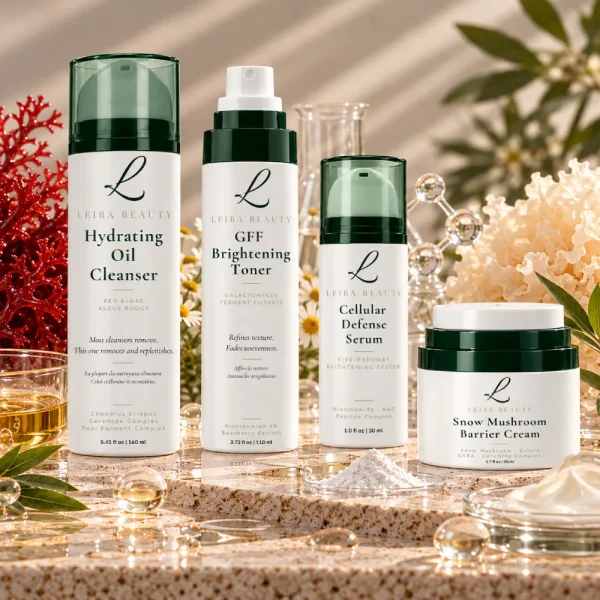
Every Leiba product is formulated with its position in the routine in mind. The pH at Step 2 primes the skin for Step 3, the barrier cream at Step 4 seals what the serum delivers, and everything underneath SPF needs to be fully absorbed before the filter layer goes on. The system works because the steps were designed as a system.
Here’s the science behind each one.
Why the Order of a Morning Skincare Routine Matters
The order of application in a skincare routine is determined by pH, molecular weight, and mechanism, not convention.
Applying the toner before the serum ensures the skin is at the right pH for active ingredients to be delivered effectively. Applying the moisturizer after the serum seals actives in before they can evaporate. SPF goes last, always, because everything beneath it must be absorbed before the physical or chemical filter layer is applied.
Skip a step or reverse two, and you don’t just lose that step’s benefit; you reduce the efficacy of everything that follows.
The Five Step Routine
Five steps. Each with a documented job. Tap any step to see the science behind it.
What Undermines a Morning Routine
- Hot water at cleanse: Degrades barrier lipids. Use lukewarm only.
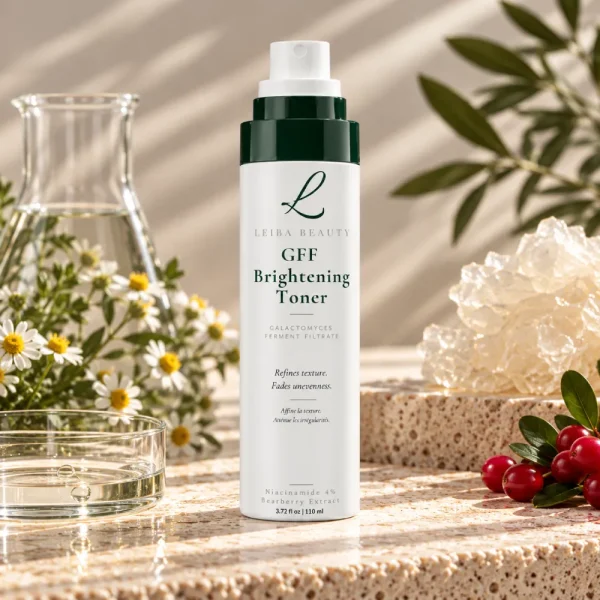
- Skipping the toner: The pH 4.3 step primes the skin for serum delivery. Without it, bioavailability at Step 3 is reduced from the first application.
- Not waiting between steps: Allow 30–60 seconds after the toner, 60 seconds after the serum. Each product needs to absorb before the next is layered.
- Skipping SPF entirely: The single most evidence-supported action for preventing premature skin aging. Not optional.
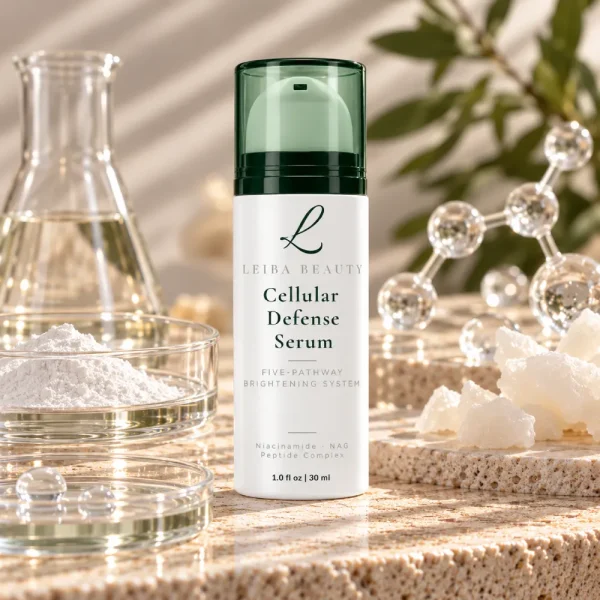
- Adding additional exfoliation at the AM step: The Cellular Defense Serum already delivers gentle exfoliation through gluconolactone (PHA). Layering glycolic or salicylic acids on top in the morning is unnecessary and increases sensitivity and sun reactivity. Save stronger acids for your PM routine.
The Logic Behind the Sequence
The Leiba morning skincare routine is designed so that each step sets up the next. The cleanser preserves what the barrier cream built overnight. The toner’s pH 4.3 primes the serum. The serum’s actives are sealed in by the barrier cream. The barrier cream wears under SPF without competing with it.
No step is filler. No ingredient is there for the label.
With Love,
Sarah Leiba, BSN, RN
Founder, Leiba Beauty
Morning Routine Questions Answered
Why does a morning routine start with a cleanser if I cleansed the night before?
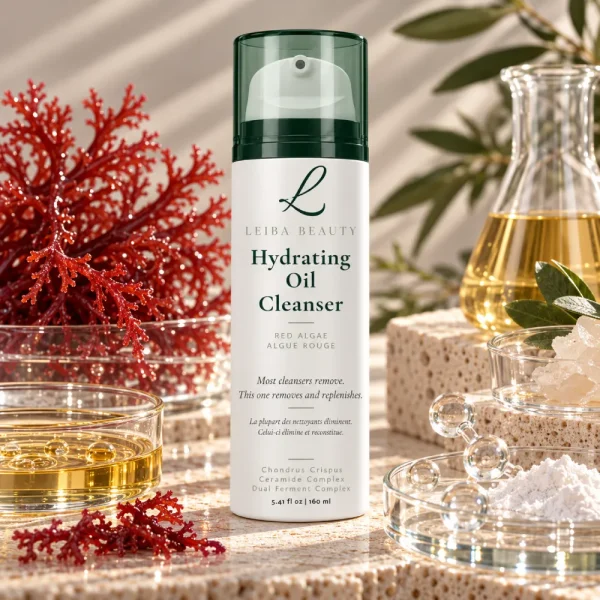
Overnight, your skin produces sebum, perspires, and sheds metabolic by-products. These sit on the surface by morning. Cleansing removes them, so the toner and serum are applied to clean skin, not on top of buildup that would dilute or block the actives.
Can I skip the toner?
You can, but you lose the pH-priming benefit. The Cellular Defense Serum is most effective when the skin is already at ~ pH 4.3, as set by the toner step. At your skin’s natural pH of approximately 5.5, the serum’s actives still work, just not at peak bioavailability from the first application.
Do I need to wait between steps?
Yes. Allow 30–60 seconds after the toner before applying the serum. Allow 60 seconds after the serum before applying the barrier cream. This ensures each product is absorbed before the next is layered. The Snow Mushroom Barrier Cream needs to be fully absorbed before applying SPF to prevent pilling.
What SPF should I use?
Broad-spectrum SPF 30 or higher. Both mineral (zinc oxide, titanium dioxide) and chemical filters are effective. The Snow Mushroom Barrier Cream is tested to wear under SPF without pilling. Apply SPF as the final step and allow it to set before makeup.
Is this morning skincare routine suitable for sensitive skin?
Yes. All four Leiba products are fragrance-free, dye-free, and free of essential oils. The three most common sensitizers in skincare. The toner uses bearberry arbutin rather than stronger depigmenting agents. The serum uses gluconolactone (PHA) rather than glycolic or lactic acid. The routine is formulated for daily use on all skin types, including sensitive and reactive skin.
How long before I see results from a consistent morning routine?
Texture improvement from the toner and serum: within the first week. Visible brightening from the niacinamide + NAG + bearberry pathway: 2–4 weeks of consistent use. Barrier-level changes measurable by TEWL reduction: 4+ weeks. Results compound. The routine works better at week eight than week one.
Which ingredients are best suited to morning use?
Antioxidants (astaxanthin, mixed tocopherols, gluconolactone), humectants
(snow mushroom, panthenol, Laminaria Saccharina), barrier support (ceramides,
ectoin, GABA), and brightening actives (niacinamide, NAG, bearberry) are all
appropriate for AM. The Leiba routine uses all of these at Steps 1–4. The one
addition that should always follow: SPF.
Scientific References
Chen Y, et al. The optimal cleansing method for the removal of sunscreen: water, cleanser or cleansing oil? J Cosmet Dermatol. 2020;19(3). doi:10.1111/jocd.12995. — Oil cleansing left 5.8% waterproof-sunscreen residue vs 36.8% for a foaming cleanser.
Spada F, et al. A daily regimen of a ceramide-dominant moisturizing cream and cleanser restores the skin permeability barrier: a randomized trial. Dermatol Ther. 2021;34(3):e14970. doi:10.1111/dth.14970. PMC8459234. · Kono et al. Water-retention and barrier-improving capabilities of ceramide-containing formulations: a qualitative review. J Dermatol. 2021. PMID 34596254.
Bjørklund G, et al. The role of astaxanthin as a nutraceutical in health and age-related conditions. Molecules. 2022;27(21):7167. PMID 36363994; PMC9655540.
Takei K, et al. Galactomyces ferment filtrate prevents Th2-mediated reduction of filaggrin in an AhR-dependent manner. Clin Exp Dermatol. 2015;40(7):786–793. PMID 25786502. · Transcriptomic analysis of human keratinocytes treated with Galactomyces ferment filtrate. J Clin Med. 2022;11(16):4645. PMC9409768.
Hakozaki T, et al. The effect of niacinamide on reducing cutaneous pigmentation and suppression of melanosome transfer. Br J Dermatol. 2002;147(1):20–31. PMID 12100180. · Boo YC. Arbutin as a skin depigmenting agent with antimelanogenic and antioxidant properties. Antioxidants. 2021;10(7):1129. PMID 34356362; PMC8301119.
Kimball AB, Kaczvinsky JR, Li J, et al. Reduction in facial hyperpigmentation after use of moisturizers with topical niacinamide and N-acetyl glucosamine: a randomized, double-blind, vehicle-controlled trial (n=202). Br J Dermatol. 2010;162(2):435–441. PMID 19845667.
Evaluation of 10% and 30% gluconolactone chemical peel on sebum, pH, and TEWL. J Cosmet Dermatol. 2023;22(12):3305–3312. doi:10.1111/jocd.15864. · A polyhydroxy acid skin-care regimen provides antiaging effects comparable to an alpha-hydroxyacid regimen. Cutis. 2004;73(2 Suppl):3–13. PMID 15002657.
Croda Beauty. [Peptide Complex] — clinical and technical data (supplier study). Supplier data reports an age-reversal equivalent of 2–5.5 years; collagen-signaling mechanism.
Tremella fuciformis polysaccharide — hydration film and UV/oxidative protection: Ma X, et al. Int J Immunopathol Pharmacol. 2021;35. PMC8172338 (review); Fu H, et al. J Cosmet Dermatol. 2021;20(12):4052–4059. PMID 36757441 (in vitro UVA).
Ectoin — TEWL reduction and hydration: Molecules. 2025. PMC12158106; systematic review, Dermatology and Therapy. 2022. PMC8850511.
GABA upregulates filaggrin and aquaporin-3 in keratinocytes (hydration mechanism). Cosmetics. 2024;11(1):19. doi:10.3390/cosmetics11010019.